
Nassau County home-value guide
Buying a waterfront home in Nassau County: what to know
Nassau County's South Shore is a waterfront market — bay, canal, and oceanfront homes across Long Beach, Oceanside, Freeport, and the towns between them. Water changes the diligence on a purchase. This guide explains the considerations that matter before you make an offer, in plain terms and without assumptions carried in from an inland sale.
Leatherman Homes · Rockville Centre · 30+ years on Long Island · 1,100+ career transactions · Data last verified June 2026.

The waterfront read at a glance
Who you are working with, and the structural facts that shape a South Shore waterfront purchase — not headline prices, which a portal can give you, but the diligence that moves value house to house.
30+ yrs
Broker Kevin Leatherman on Long Island, from the 25 S Village Ave office in Rockville Centre since 1996
1,100+
Career transactions across the South Shore — bay, canal, and beach property, plus co-ops and condos
3 forms
Bay, canal, and oceanfront — three distinct water types, each read property by property
Attorney state
New York runs a contract-and-attorney closing — the diligence on a waterfront home folds into that timeline
Waterfront on the South Shore is a category of its own
A waterfront home on Nassau's South Shore is not simply a single-family house with a better view. The water is part of the asset, and it is also part of the diligence. Two homes one block apart can sit in different flood zones, carry different insurance pictures, and present different lending paths — and none of that is visible in a listing photo.
The South Shore waterfront runs from the barrier-island beachfront in Long Beach through the bays and canal networks behind Oceanside and Freeport and out along the rest of the shoreline. It includes bayfront homes with docks and bulkheads, canal homes on dredged inlets, and oceanfront and near-ocean property. Each form of water access carries its own questions. The right approach is to evaluate every property on its own facts rather than apply a single rule of thumb to the whole market.
Waterfront buying at a glance
The short version for a buyer who wants the shape of a South Shore waterfront purchase before the detail.
Where
Nassau's South Shore — Long Beach, Oceanside, Freeport, and the bay and canal communities along the shoreline.
What you'll find
Bayfront and canal homes with docks and bulkheads, oceanfront and near-ocean property, plus condos and co-ops near the beach.
The diligence that's different
Flood zone and elevation, layered insurance, and dock, bulkhead, or seawall condition — each read for the exact property.
How to verify
FEMA flood maps, the home's elevation certificate, a current insurance quote, and the dock or bulkhead permit history.
Where the water is: bay, canal, and ocean communities
On a thematic waterfront guide, "neighborhoods" means the kind of water you are buying onto. The South Shore communities skew toward one of three forms, and that — more than the town name — sets the diligence, the insurance picture, and the daily use of the home.
Bayfront communities
Open-water bay frontage on Hewlett Bay, Reynolds Channel, and the back bays behind the barrier island — Oceanside, Freeport, Baldwin Harbor, Merrick, Bellmore, and Wantagh hold much of it. Wider views, deeper water for a larger boat, and more direct storm and tidal exposure. Bulkhead and dock condition matter most here.
Canal communities
Dredged finger canals and lagoons run behind Freeport, Oceanside, Massapequa-adjacent Wantagh, and parts of Merrick and Bellmore. A canal home trades the open view for protected, sheltered dockage and quieter water — often a more even keel in a blow. Water depth at the slip and the canal's dredging history are the property-specific facts to confirm.
Oceanfront and beach communities
The barrier island — Long Beach, Atlantic Beach, Island Park, and Point Lookout — carries the ocean-adjacent and near-ocean stock, including a real pool of condos and co-ops. Beach and boardwalk access, the highest flood and wind exposure, and the most building-level (co-op or condo) diligence of the three.
Reading the community by its water type is the start. The next layer is the property type itself, since a house, a co-op share, and a condo each carry a different purchase path.
The property types you will encounter
"Waterfront" covers several distinct situations on the South Shore. Knowing which one you are looking at shapes the financing, the carrying cost, and the inspection.
Bayfront and canal homes
Bayfront and canal-front single-family homes are the heart of the South Shore waterfront. They often come with a dock, a bulkhead, or a seawall — structures that protect the property and need their own inspection and maintenance history. Bulkhead condition, dock permits, and water depth at the slip are property-specific facts worth confirming early rather than assuming.
Oceanfront, condos, and co-ops
Near the beach, particularly in Long Beach, the waterfront pool includes condominiums and cooperative apartments as well as detached homes. A condo or co-op shifts some exterior and flood exposure onto the building and its reserves, which changes what you are evaluating. Co-op and condo transactions are a stated specialty at Leatherman Homes, and the building's own situation becomes part of your diligence.
Flood zones and insurance: the part that surprises buyers
Flood risk and insurance are where a waterfront purchase differs most from an inland one. None of this is a reason to avoid the market — it is a reason to understand each property before you commit.
Most South Shore waterfront sits within a designated flood zone, and the zone is determined by federal flood maps rather than by the seller or the agent. The zone, the home's elevation, and any flood-protection work done to the structure all factor into the flood insurance picture. You can look up the zone for any address yourself through the FEMA Flood Map Service Center. Because those facts are property-specific, the only reliable approach is to read them for the exact home — its elevation certificate, its zone designation, and its claims and elevation history where available.
Insurance on the coast is usually layered. A waterfront home commonly carries a homeowner's policy plus separate flood coverage, often written through the National Flood Insurance Program, and wind or windstorm coverage can be handled differently near the shore than it is inland. The cost and availability vary by property and change over time, so a current quote on the specific home — not a general estimate — is the figure that belongs in your budget. Building this into the offer timeline, rather than discovering it after you are in contract, keeps the purchase on solid ground.
Map the South Shore shoreline
The fastest way to read the waterfront is to put the communities and their bays, canals, and inlets on a map. Open any of these to see how the shoreline, the barrier island, and the marina basins fall before you tour.
Nassau County, NY market snapshot
The live numbers for Nassau County, NY, pulled from the MLS and refreshed daily — sold count, average sale price, average days on market, and the 12-month average sold-price trend.
South Shore waterfront on the market now
Conditions on the waterfront move week to week, and a median printed today is stale by the time you read it. Rather than publish a number that goes out of date, we keep the live picture here — active South Shore listings pulled from the MLS and refreshed daily. Market read as of June 2026: inventory on the bay, canal, and beach segments stays tight relative to demand, so the right filter and a quick viewing matter more than a headline average.

- Reset all filters or remove one of your filters above to see more properties
explore listings in Nassau County
What to ask before you make an offer
A short, property-specific checklist separates a confident waterfront offer from a hopeful one. Each item is a question to answer for the exact home in front of you.
- What flood zone is the property in, and is there a current elevation certificate on file?
- What does flood insurance, plus wind or windstorm coverage, cost for this home today?
- If there is a dock, bulkhead, or seawall, what is its condition, age, and permit status?
- Has the structure been elevated or flood-mitigated, and is that work documented?
- For a condo or co-op, what does the building carry for flood exposure, reserves, and assessments?
- How does the lot sit relative to the water — depth at the dock, tidal range, and drainage?
My take on buying waterfront on the South Shore
Thirty years working this shoreline comes down to a short, honest list. Here is where South Shore waterfront is strong, and where to go in with your eyes open — because the water is both the reason to buy and the reason to do more diligence.
What works in your favor
- Dock access and deep-water boating you simply cannot add to an inland house — on the bay and the canals, the water is the lifestyle and the value.
- Beach and boardwalk proximity on the barrier island, with a one-seat Long Island Rail Road commute toward Manhattan from Long Beach.
- A wider range of entry points than the inland villages, because the beach-area condo and co-op stock opens a door the detached market does not.
- Scarcity that holds value — they are not building more shoreline, so genuine waterfront stays in demand across cycles.
What to go in clear-eyed about
- Flood-insurance carrying cost is a real, recurring line item — layered homeowner, flood, and wind coverage can add meaningfully to the monthly, and it belongs in the budget before the view wins you over.
- Storm and tidal exposure is highest at the water — read the FEMA flood zone and the home's elevation certificate before you fall for the listing photo.
- A dock, bulkhead, or seawall is a structure you inherit — its age, condition, and permit status drive both value and future repair cost.
- On a beach-area co-op or condo, the building's own flood exposure, reserves, and assessments become part of your diligence — the building matters as much as the unit.
Working with Leatherman Homes on the waterfront
Leatherman Homes is a boutique Nassau County team led by broker Kevin Leatherman, with 30-plus years on Long Island and 1,100-plus career transactions behind how the team prices, negotiates, and protects a client's largest investment. On a South Shore waterfront home that means a documented read on the flood zone and elevation, the dock, bulkhead, or seawall, any co-op or condo building financials, and recent comparable sales before you write an offer — transparent guidance, real numbers, no fine print and no surprises. Co-op and condo transactions are a stated specialty, directly relevant to the attached-housing share near the beach.
Kevin is a past president of the Long Island Board of REALTORS® and of MLSli, and sits on the Board of Managers of OneKey® MLS — which means the same person reading your waterfront contract has spent years inside the systems that move every Long Island deal. When a closing needs a surveyor for an elevation certificate, an attorney for the New York contract process, or a way through a complicated co-op or estate situation, that network is part of what you are hiring.
- Broker, 30+ years
- 1,100+ transactions
- Co-op & condo specialist
- Past President, LIBOR
- Past President, MLSli
- Board of Managers, OneKey® MLS
- ABR® · SFR® · e-PRO®
My husband and I had a fairly tricky situation and we couldn't be more satisfied. Mr Leatherman was an absolute pleasure to deal with. - allisonrose870 · Verified Zillow review
Kevin found our co-op for my wife and me. Kevin was sensitive to our needs and responsive to our calls. - LaserDave22 · Verified Zillow review
Waterfront buyer questions
Common questions about buying a waterfront home on Nassau County's South Shore, answered at a high level. For property-specific guidance, contact the team.
Are most waterfront homes in Nassau County in a flood zone?
Most South Shore waterfront sits within a designated flood zone, and the zone is set by federal flood maps rather than by the seller or the agent. The specific zone, the home's elevation, and any flood-protection work all factor into the insurance picture, so the reliable step is to read those facts for the exact property rather than assume them.
What kinds of waterfront homes are available on the South Shore?
The South Shore waterfront includes bayfront and canal-front single-family homes, many with a dock or bulkhead, along with oceanfront and near-ocean property and a pool of condominiums and cooperative apartments near the beach. Each form of water access carries its own questions, so it helps to know which type you are evaluating early.
How does flood insurance work for a waterfront home here?
Insurance on the coast is usually layered. A waterfront home commonly carries a homeowner's policy plus separate flood coverage, and wind or windstorm coverage can be handled differently near the shore than inland. Cost and availability vary by property and change over time, so a current quote on the specific home is the figure that belongs in your budget.
What should I check about a dock, bulkhead, or seawall?
If there is a dock, bulkhead, or seawall, its condition, age, and permit status are property-specific facts worth confirming early. Bulkhead condition, dock permits, and water depth at the slip affect both the value and the upkeep of a bayfront or canal home, so they belong in the diligence rather than after the close.
Is buying a waterfront condo or co-op different from a waterfront house?
It can be. A condo or co-op shifts some exterior and flood exposure onto the building and its reserves, which changes what you are evaluating — the building's flood situation, reserves, and assessments become part of your diligence. Co-op and condo transactions are a stated specialty at Leatherman Homes.
What is an elevation certificate, and do I need one?
An elevation certificate is a document, prepared by a licensed surveyor, that records a building's elevation relative to the flood map's base flood elevation. For a waterfront home it often drives the flood insurance rating, so asking whether a current one is on file — and ordering one where it is not — is a reasonable step before you commit. The FEMA Flood Map Service Center is the public starting point for the zone behind it.
Does buying a waterfront home take longer than an inland purchase?
The contract sequence is the same New York attorney-state process, but the diligence on a waterfront home adds steps — confirming the flood zone, getting a current insurance quote, and inspecting any dock or bulkhead. Folding those into the timeline early, rather than after you are in contract, is what keeps a waterfront purchase on schedule rather than stalling it near the close.
How do I see what waterfront homes are for sale right now?
Current listings across the South Shore communities are kept up to date on the listings pages linked below, where you can filter by area and property type. To talk through a specific waterfront property or building, contact Leatherman Homes.
Waterfront resources and public records
Independent sources we use, and that any Nassau waterfront buyer can check directly for a specific address.
- FEMA Flood Map Service Center — flood-zone and base-flood-elevation lookup by address.
- National Flood Insurance Program (FloodSmart.gov) — how flood coverage and ratings work.
- Nassau County Department of Assessment — property assessments and tax records.
- New York Department of State, Office of Planning & Development — coastal management and waterfront-area programs.
- New York State DEC tidal-wetlands permits — what dock, bulkhead, and shoreline work requires.
- New York State Education Department — school-district boundaries and report cards.
Explore more
Related Leatherman Homes guides for the South Shore waterfront communities.
Considering a waterfront home?
See what is on the market across the South Shore today, or reach the team for guidance on a specific waterfront property or building.
NASSAU COUNTY LIVING & LIFESTYLE

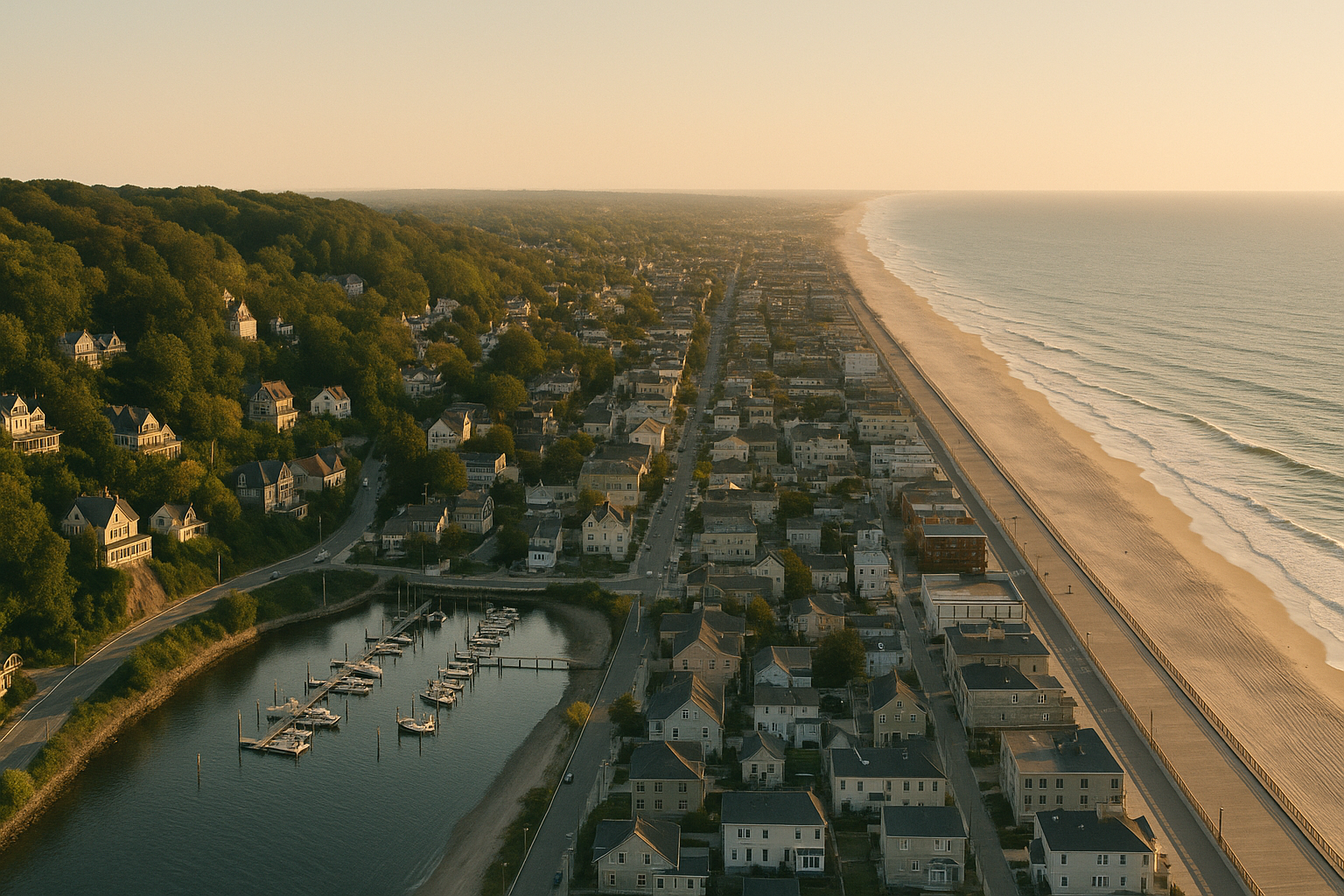
Sea Cliff vs. Long Beach: which is better for you?
Nassau County · community comparison Sea Cliff vs. Long Beach: which is better for you? Two Nassau County waterfront communities, two very different lives. Sea Cliff is a hilly North Shore harbor village; Long Beach is a flat South Shore beach city. This comparison walks the trade-offs (charac

Pros and Cons of Moving to Rockville Centre
Buying on the South Shore · Rockville Centre Pros and Cons of Moving to Rockville Centre An honest look at what you trade for and against when you buy in this Nassau County village: the walkable downtown and the rail commute on one side, the cost of living and the co-op learning curve on the o

Homes along the Port Washington branch: Great Neck, Manhasset, Plandome, and Port Washington
Port Washington, NY · Corridor guide Homes along the Port Washington branch: Great Neck, Manhasset, Plandome, and Port Washington Four stations, one branch, and a housing market that reads more like a corridor than four separate towns. What each name signals, and how to search them together in
MEET OUR AGENTS

Kevin Leatherman, REALTOR
Real Estate Broker

Brendan Shalloo
Marketing Assistant

Camille Giardina
Broker Associate

Jacqueline Furino
Real Estate Salesperson
REVIEWS
GET MORE INFORMATION
Real Estate Broker Kevin Leatherman 31LE1175078Leatherman Homes 109920961